Colonic Endoscopic Tattooing and Its Impact on Colorectal Surgery: More Than Just a Mark
DOI:
https://doi.org/10.22516/25007440.1324Keywords:
Endoscopy, tattooing, colon, surgeryAbstract
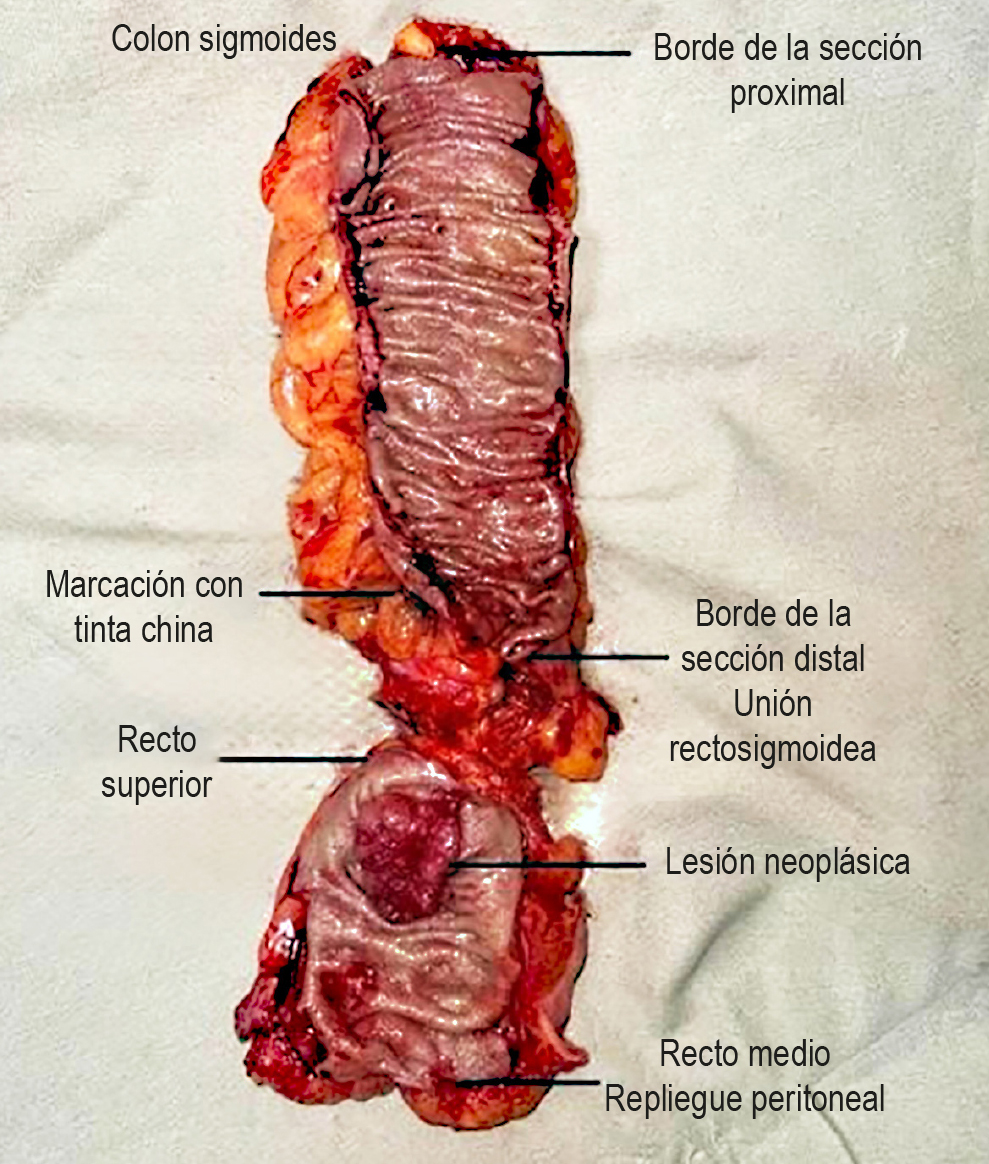
Introduction: Endoscopic tattooing of colorectal lesions has evolved from a simple marking technique into an essential tool for preoperative localization in colorectal surgery. Since its introduction in 1958, its utility has been particularly demonstrated in minimally invasive surgeries, where tactile feedback is limited.
Objective: To review the role of endoscopic tattooing and its surgical implementation, as well as the outcomes achieved, to facilitate lesion identification, ensure adequate oncologic margins, and reduce operative times.
Methods: A comprehensive literature review was conducted, highlighting current indications, techniques, and recommendations for endoscopic tattooing. Guidelines from the American Society for Gastrointestinal Endoscopy (ASGE) regarding its use in the colorectal context were also analyzed.
Results: Evidence supports the use of endoscopic tattooing in the transverse, descending, and sigmoid colon, improving intraoperative localization and reducing the risk of incorrect resections. For the right colon, anatomical landmarks are recommended as an alternative. In the rectum, tattooing is debated due to the risk of lymphatic ink absorption and potential overstaging in imaging studies.
Conclusions: Endoscopic tattooing is a cost-effective and precise method for lesion localization, directly impacting surgical planning, confidence in resection margins, and oncologic outcomes. Implementing standardized guidelines on its use is crucial to maximize its benefits in colorectal surgery.
Downloads
References
Sauntry JP, Knudtson KP. A technique for marking the mucosa of the gastrointestinal tract after polypectomy. Cancer. 1958;11(3):607-10. https://doi.org/10.1002/1097-0142(195805/06)11:3<607::aid-cncr2820110322>3.0.co;2-y
Knoernschild HE. The use of a tattooing instrument for marking colonic mucosa. Am J Surg. 1962;103:83-5. https://doi.org/10.1016/0002-9610(62)90019-3
Ponsky JL, King JF. Endoscopic marking of colonic lesions. Gastrointest Endosc. 1975;22(1):42-3. https://doi.org/10.1016/S0016-5107(75)73687-8
Vaziri K, Choxi SC, Orkin BA. Accuracy of colonoscopic localization. Surg Endosc. 2010;24(10):2502-5. https://doi.org/10.1007/s00464-010-0993-2
Borda F, Jiménez FJ, Borda A, Urman J, Goñi S, Ostiz M, et al. Endoscopic localization of colorectal cancer: study of its accuracy and possible error factors. Rev Esp Enferm Dig. 2012;104(10):512-7. https://doi.org/10.4321/S1130-01082012001000002
Bonjer HJ, Deijen CL, Abis GA, Cuesta MA, van der Pas MH, de Lange-de Klerk ES, et al. A randomized trial of laparoscopic versus open surgery for rectal cancer. N Engl J Med. 2015;372(14):1324-32. https://doi.org/10.1056/NEJMoa1414882
Elarini T, Wexner SD, Isenberg GA. The need for standardization of colonoscopic tattooing of colonic lesions. Dis Colon Rectum. 2015;58(2):264-7. https://doi.org/10.1097/DCR.0000000000000304
Feingold DL, Addona T, Forde KA, Arnell TD, Carter JJ, Huang EH, et al. Safety and reliability of tattooing colorectal neoplasms prior to laparoscopic resection. J Gastrointest Surg. 2004;8(5):543-6. https://doi.org/10.1016/j.gassur.2003.12.016
Arteaga-González I, Martín-Malagón A, Fernández EM, Arranz-Durán J, Parra-Blanco A, Nicolas-Perez D, et al. The use of preoperative endoscopic tattooing in laparoscopic colorectal cancer surgery for endoscopically advanced tumors: a prospective comparative clinical study. World J Surg. 2006;30(4):605-11. https://doi.org/10.1007/s00268-005-0473-3
Kirchoff DD, Hang JH, Cekic V, Baxter K, Kumar P, Shehebar J, et al. Endoscopic tattooing to mark distal margin for low anterior rectal and select sigmoid resections. Surg Innov. 2014;21(4):376-80. https://doi.org/10.1177/1553350613507147
ASGE Technology Committee; Kethu SR, Banerjee S, Desilets D, Diehl DL, Farraye FA, et al. Endoscopic tattooing. Gastrointest Endosc. 2010;72(4):681-5. https://doi.org/10.1016/j.gie.2010.06.020
Feingold DL, Addona T, Forde KA, Arnell TD, Carter JJ, Huang EH, et al. Safety and reliability of tattooing colorectal neoplasms prior to laparoscopic resection. J Gastrointest Surg. 2004;8(5):543-6. https://doi.org/10.1016/j.gassur.2003.12.016
Rodríguez de Santiago E, Dinis-Ribeiro M, Pohl H, Agrawal D, Arvanitakis M, Baddeley R, et al. Reducing the environmental footprint of gastrointestinal endoscopy: European Society of Gastrointestinal Endoscopy (ESGE) and European Society of Gastroenterology and Endoscopy Nurses and Associates (ESGENA) Position Statement. Endoscopy. 2022;54(8):797-826. https://doi.org/10.1055/a-1859-3726
Medina-Prado L, Hassan C, Dekker E, Bisschops R, Alfieri S, Bhandari P, et al. When and How To Use Endoscopic Tattooing in the Colon: An International Delphi Agreement. Clin Gastroenterol Hepatol. 2021;19(5):1038-1050. https://doi.org/10.1016/j.cgh.2021.01.024
Barquero D, González V, García O, Fernández A, Blasco A, Navarro M, et al. Ways to perform an endoscopic tattoo. Prospective and randomized study in patients with colorectal neoplasm. Rev Esp Enferm Dig. 2021;113(7):519-523. https://doi.org/10.17235/reed.2020.7310/2020
Askin MP, Waye JD, Fiedler L, Harpaz N. Tattoo of colonic neoplasms in 113 patients with a new sterile carbon compound. Gastrointest Endosc. 2002;56(3):339-42. https://doi.org/10.1067/mge.2002.126905
Hammond DC, Lane FR, Mackeigan JM, Passinault WJ. Endoscopic tattooing of the colon: clinical experience. Am Surg. 1993;59(3):205-10.
Shatz BA, Weinstock LB, Swanson PE, Thyssen EP. Long-term safety of India ink tattoos in the colon. Gastrointest Endosc. 1997;45(2):153-6. https://doi.org/10.1016/S0016-5107(97)70239-6
Park JW, Sohn DK, Hong CW, Han KS, Choi DH, Chang HJ, et al. The usefulness of preoperative colonoscopic tattooing using a saline test injection method with prepackaged sterile India ink for localization in laparoscopic colorectal surgery. Surg Endosc. 2008;22(2):501-5. https://doi.org/10.1007/s00464-007-9495-2
Conaghan PJ, Maxwell-Armstrong CA, Garrioch MV, Hong L, Acheson AG. Leaving a mark: the frequency and accuracy of tattooing prior to laparoscopic colorectal surgery. Colorectal Dis. 2011;13(10):1184-7. https://doi.org/10.1111/j.1463-1318.2010.02423.x
Fu KI, Fujii T, Kato S, Sano Y, Koba I, Mera K, et al. A new endoscopic tattooing technique for identifying the location of colonic lesions during laparoscopic surgery: a comparison with the conventional technique. Endoscopy. 2001;33(8):687-91. https://doi.org/10.1055/s-2001-16217
Keller D, Jaffe J, Philp MM, Haluszka O, Khanna A. Should all endoscopically excised rectal polyps be tattooed? A plea for localization. Surg Endosc. 2012;26(11):3101-5. https://doi.org/10.1007/s00464-012-2346-9
Downloads
Published
How to Cite
Issue
Section
License
Copyright (c) 2025 Revista colombiana de Gastroenterología

This work is licensed under a Creative Commons Attribution-NonCommercial-NoDerivatives 4.0 International License.
Aquellos autores/as que tengan publicaciones con esta revista, aceptan los términos siguientes:
Los autores/as ceden sus derechos de autor y garantizarán a la revista el derecho de primera publicación de su obra, el cuál estará simultáneamente sujeto a la Licencia de reconocimiento de Creative Commons que permite a terceros compartir la obra siempre que se indique su autor y su primera publicación en esta revista.
Los contenidos están protegidos bajo una licencia de Creative Commons Reconocimiento-NoComercial-SinObraDerivada 4.0 Internacional.