Anorectal Abscess Due to Foreign Body Ingestion: A Case Report
DOI:
https://doi.org/10.22516/25007440.1284Keywords:
Rectal fistula, foreign body reaction, gastrointestinal tract, abscessAbstract
Introduction: An anorectal abscess results from the involvement of the anal glands. Its main cause is obstruction of these glands, followed by Crohn’s disease, trauma, malignancy, and immunodeficiencies. Ingestion of a foreign body is a rare etiology, with toothpick trauma described in the literature.
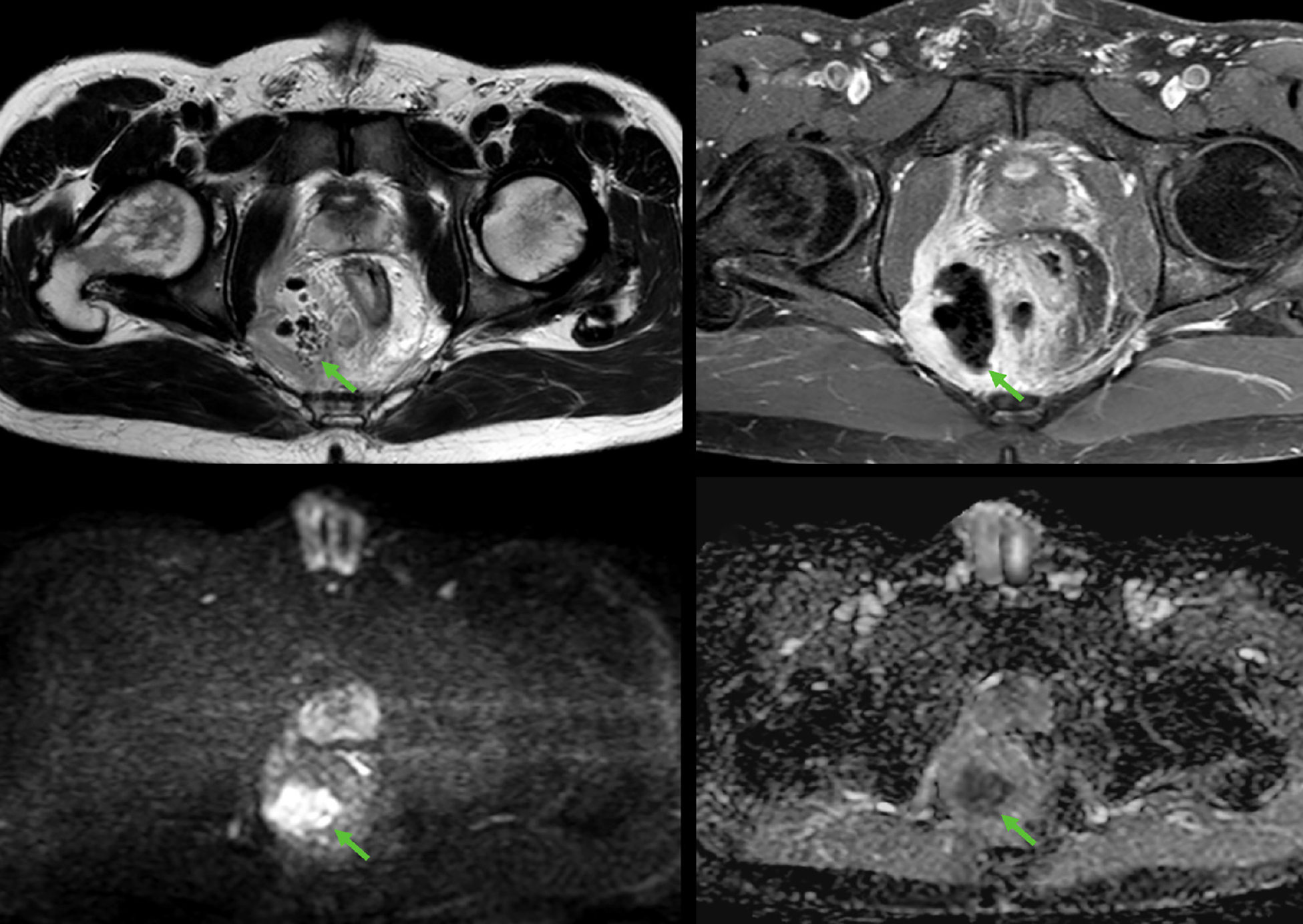
Case Presentation: A 36-year-old man with no relevant medical history presented with a one-week history of sharp abdominal pain, followed by perianal pain accompanied by fever and purulent drainage. Initial evaluation documented an anorectal abscess extending above the levator ani muscle. A subsequent MRI revealed a toothpick as the causative foreign body. The patient underwent surgical management and a 10-day course of targeted antibiotic therapy.
Conclusions: Anorectal abscess due to foreign body ingestion is rare, often unrecognized, and imaging sensitivity is variable. Computed tomography is recommended as the initial imaging modality. Supra-levator involvement requires early and adequate drainage to prevent fistula formation.
Downloads
References
Thompson DT, Hrabe JE. Intra-abdominal and Anorectal Abscesses. Gastroenterol Clin North Am. 2021;50(2):475-88. https://doi.org/10.1016/j.gtc.2021.02.014
Gaertner WB, Burgess PL, Davids JS, Lightner AL, Shogan BD, Sun MY, et al. The American Society of Colon and Rectal Surgeons Clinical Practice Guidelines for the Management of Anorectal Abscess, Fistula-in-Ano, and Rectovaginal Fistula. Dis Colon Rectum. 2022;65(8):964-85. https://doi.org/10.1097/DCR.0000000000002473
Ortiz H, Marzo M, de Miguel M, Ciga MA, Oteiza F, Armendariz P. Length of follow-up after fistulotomy and fistulectomy associated with endorectal advancement flap repair for fistula in ano. Br J Surg. 2008;95(4):484-7. https://doi.org/10.1002/bjs.6023
Zhang X, Xing M, Lei S, Li W, Li Z, Xie Y, et al. Case report and literature review: Orally ingested toothpick perforating the lower rectum. Front Surg. 2024;11:1368762. https://doi.org/10.3389/fsurg.2024.1368762
Steinbach C, Stockmann M, Jara M, Bednarsch J, Lock JF. Accidentally ingested toothpicks causing severe gastrointestinal injury: a practical guideline for diagnosis and therapy based on 136 case reports. World J Surg. 2014;38(2):371-7. https://doi.org/10.1007/s00268-013-2307-z
Wang X, Zhao J, Jiao Y, Wang X, Jiang D. Upper gastrointestinal foreign bodies in adults: A systematic review. Am J Emerg Med. 2021;50:136-41. https://doi.org/10.1016/j.ajem.2021.07.048
Yang Z, Wu D, Xiong D, Li Y. Gastrointestinal perforation secondary to accidental ingestion of toothpicks: A series case report. Medicine (Baltimore). 2017;96(50):e9066. https://doi.org/10.1097/MD.0000000000009066
Zakościelny A, Zgodziński W, Wallner G, Zinkiewicz K. Endoscopic removal of an impacted wooden toothpick in the wall of the sigmoid colon. Wideochir Inne Tech Maloinwazyjne. 2018;13(3):417-419. ttps://doi.org/10.5114/wiitm.2018.75863
Mark D, Ferris K, Martel G, Mulholland K. Radiological diagnosis of a small bowel perforation secondary to toothpick ingestion. BMJ Case Rep. 2013;2013:bcr2013009869. https://doi.org/10.1136/bcr-2013-009869
Xavier J, Stewart P. Laparoscopic removal of a toothpick perforating the upper rectum. ANZ J Surg. 2020;90(6):1184-6. https://doi.org/10.1111/ans.15489
Zinicola R, Cracco N, Rossi G, Giuffrida M, Giacometti M, Nicholls RJ. Acute supralevator abscess: the little we know. Ann R Coll Surg Engl. 2022;104(9):645-9. https://doi.org/10.1308/rcsann.2021.0257
Downloads
Published
How to Cite
Issue
Section
License
Copyright (c) 2025 Revista colombiana de Gastroenterología

This work is licensed under a Creative Commons Attribution-NonCommercial-NoDerivatives 4.0 International License.
Aquellos autores/as que tengan publicaciones con esta revista, aceptan los términos siguientes:
Los autores/as ceden sus derechos de autor y garantizarán a la revista el derecho de primera publicación de su obra, el cuál estará simultáneamente sujeto a la Licencia de reconocimiento de Creative Commons que permite a terceros compartir la obra siempre que se indique su autor y su primera publicación en esta revista.
Los contenidos están protegidos bajo una licencia de Creative Commons Reconocimiento-NoComercial-SinObraDerivada 4.0 Internacional.